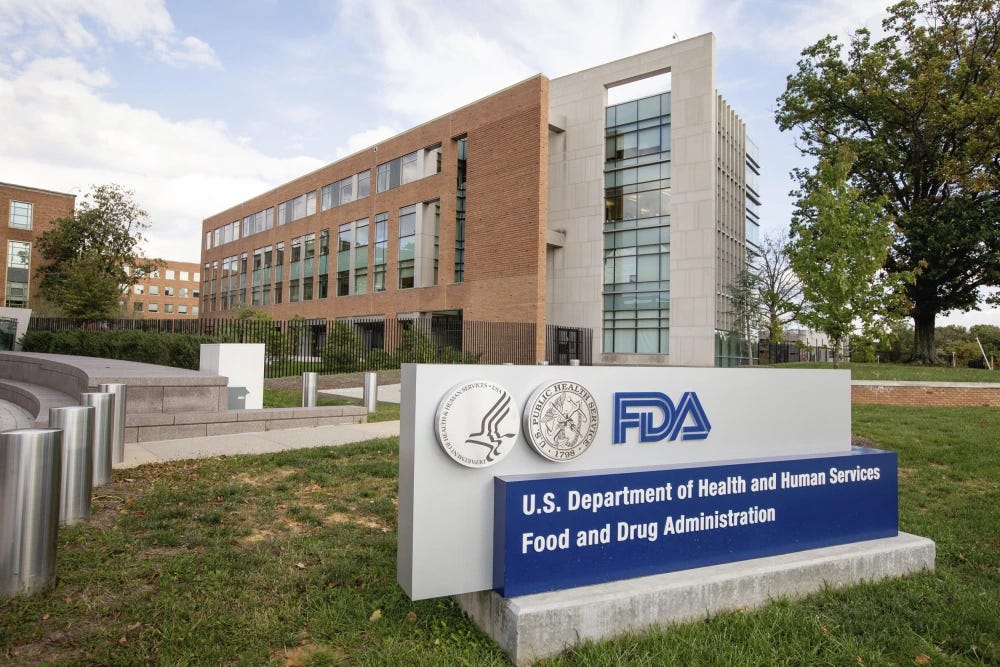
On September 14, the U.S. Food and Drug Administration will hold a hybrid public hearing at its White Oak campus in Silver Spring, Maryland, to gather perspectives on the future therapeutic use of psychedelic drugs in supervised clinical settings. The hearing runs from 12:30 to 4:30 p.m. ET, with a virtual option for remote attendees. Requests to present are due by August 21; written public comments will be accepted through October 5.
On paper, it’s a four-hour afternoon meeting. In context, it’s one of the clearest signals yet that the federal government is treating psychedelic medicine as a serious, near-term regulatory question rather than a fringe research curiosity.
What the hearing is, and isn’t, about
The FDA has been specific about scope. The agency is looking for input on how drug products containing a psychedelic substance might be used therapeutically in supervised, supportive settings. It is explicitly not soliciting opinions on scheduling under the Controlled Substances Act, legalization, decriminalization, state-level psilocybin programs, or religious and personal use. This is a clinical and regulatory conversation, not a culture-war one.
This tells stakeholders (researchers, clinicians, patient advocates, drug developers) that the FDA is already thinking past the question of whether a psychedelic drug might eventually be approved, and starting to work through how it would be delivered, monitored, and integrated into existing healthcare infrastructure.
Why now
The hearing didn’t materialize out of nowhere. Three developments in 2026 have converged to create the current momentum.
First, on April 18, President Trump signed Executive Order 14401, “Accelerating Medical Treatments for Serious Mental Illness.” The order directs the FDA to issue Commissioner’s National Priority Vouchers to qualifying psychedelic drugs, instructs the DEA to expedite rescheduling review for Schedule I substances that have completed Phase 3 trials, creates a Right to Try pathway for ibogaine compounds and other psychedelics, and commits $50 million toward federal-state research collaboration. Within days of the signing, the FDA had awarded priority vouchers to three programs: two studying psilocybin for depression and one studying methylone for PTSD.
Second, in mid-July the FDA finalized its long-awaited guidance document, “Psychedelic Drugs: Considerations for Clinical Investigations,” after a three-year revision process dating back to a June 2023 draft. The guidance tackles the distinctive challenges of psychedelic trial design: functional unblinding (participants often know they got the active drug), the role of psychological support during sessions, adverse-event recording for expected perceptual effects, and the economics of intensive in-session monitoring. It doesn’t lower the evidentiary bar, but it gives sponsors a clearer blueprint for clearing it.
Third, Compass Pathways is in the middle of a rolling NDA submission for COMP360, its proprietary psilocybin formulation for treatment-resistant depression, with final submission targeted for Q4 2026 and a commercial launch planned for the first half of 2027. If approved, COMP360 would become the first classic psychedelic ever to receive FDA marketing authorization. The agency has granted it both Breakthrough Therapy designation and a National Priority Voucher, the latter of which could compress review timelines to as little as one to two months after filing.
The shadow of Lykos
None of this erases what happened in 2024. Lykos Therapeutics, then the most advanced psychedelic program in the country, saw its MDMA-assisted therapy for PTSD rejected after an FDA advisory committee voted 10–1 against recommending approval. The agency issued a complete response letter in August 2024, citing trial design concerns, particularly the functional unblinding problem and questions about whether observed benefits could be cleanly separated from expectation effects. Lykos subsequently cut roughly three-quarters of its staff.
The Lykos experience is the essential backdrop to everything happening now. The finalized clinical guidance reads, in many places, as a direct response to the methodological questions that derailed that application. And the September 14 hearing reflects an agency that seems determined to get the implementation framework right before an approval lands, rather than scrambling afterward.
What to watch for
The hearing’s real significance will depend on who shows up and what they say. The FDA is casting a wide net: clinicians, researchers, patients, caregivers, drug developers, and the general public are all invited to present or submit comments. A few questions are likely to dominate.
How should psychedelic therapy be delivered in practice? The HRSA, in a parallel request for information published the same week, is already asking about training models and care delivery for underserved communities, including rural health clinics and federally qualified health centers. Who administers the drug, who monitors the session, and what qualifications they need are not settled questions.
What does post-approval risk management look like? The FDA’s finalized guidance signals that a Risk Evaluation and Mitigation Strategy, or REMS, is likely for any approved psychedelic. The specifics (restricted distribution, mandatory prescriber certification, required observation periods) will shape both access and cost.
And perhaps most fundamentally: can the regulatory infrastructure keep pace with the political momentum? An executive order can accelerate timelines, but it can’t manufacture clinical evidence or resolve the genuine scientific uncertainties that remain around dosing protocols, durability of effect, and long-term safety.
A decade ago, the idea of the FDA hosting a public hearing on psychedelic therapy would have seemed implausible. Today it feels almost overdue. The September 14 hearing is worth paying attention to, not because it will resolve the hard questions, but because it’s where you’ll start to see the outlines of the answers.
Registration is free and open now at fda.gov.